

Identify collaboration opportunities that match your current career stage and artistic vision. Emerging artists benefit most from co-writing sessions with peers, opening slots for complementary acts, and joint social media campaigns that split costs while doubling reach. Mid-career musicians should pursue brand sponsorships, playlist partnerships with curators who champion Canadian talent, and cross-genre collaborations that introduce you to new audiences. Established artists can leverage their platform through mentorship programs, festival partnerships, and strategic alliances with venues across provinces.
Research potential partners thoroughly before committing. Examine their social media engagement rates, not just follower counts—authentic connection matters more than vanity metrics. Review past collaborations to understand their working style and values. Request references from other artists who’ve worked with them, particularly fellow Canadians who understand our unique market challenges from coast to coast to coast.
Protect yourself legally from day one. Draft clear partnership agreements outlining revenue splits, creative control, intellectual property rights, and exit strategies. Even handshake deals between friends need documentation—memories fade and circumstances change. Consult with entertainment lawyers familiar with Canadian copyright law and SOCAN registration requirements before signing anything.
Create genuine value for both parties. The strongest partnerships emerge when each artist brings distinct strengths—one might have superior production skills while another commands a dedicated regional following. Successful collaborations in Toronto, Montreal, Vancouver, and beyond share this reciprocal foundation. Focus on building relationships that elevate everyone involved rather than transactional exchanges. When partnerships feel authentic, audiences notice and respond, transforming casual listeners into devoted fans who follow your collaborative journey across Canada’s vibrant music landscape.
What Artist Partnerships Really Mean in Today’s Music Industry
Gone are the days when a record deal was the only ticket to success in music. Today’s Canadian artists are building careers through a rich tapestry of collaborative relationships that extend far beyond the traditional label contract. Artist partnerships now encompass everything from co-writing sessions with fellow musicians to brand collaborations with local businesses, and these relationships are reshaping how we think about success in the music industry.
At their core, modern artist partnerships are mutually beneficial relationships where both parties bring value to the table. Unlike conventional business arrangements where one entity typically holds more power, these partnerships thrive on reciprocity. When Toronto indie band Valley collaborates with a sustainable fashion brand, or when a Maritime folk artist teams up with a local craft brewery for an intimate concert series, both sides gain exposure to new audiences while staying true to their authentic identities.
- Co-Promotion Partnerships
- Two or more artists join forces to cross-promote each other’s work, sharing audiences and resources. This approach works particularly well when artists have complementary sounds or overlapping fanbases.
- Brand Partnerships
- Artists collaborate with companies or products that align with their values, creating authentic content that benefits both the musician and the brand. These partnerships can range from sponsored social media posts to custom product lines.
- Cross-Genre Collaborations
- Musicians from different genres work together to create innovative sounds and reach diverse audiences. Think hip-hop artists collaborating with country singers or electronic producers remixing folk tracks.
- Venue Partnerships
- Artists develop ongoing relationships with specific performance spaces, creating residencies or regular appearances that build community. These partnerships provide stability and help artists cultivate dedicated local followings.
- Digital Platform Partnerships
- Musicians work directly with streaming services, social media platforms, or content creators to gain visibility through playlists, features, or collaborative content. These relationships have become essential in the digital-first music landscape.
For Canadian artists especially, these partnerships offer crucial opportunities to overcome geographic challenges and break into new markets. Whether you’re an emerging bedroom producer in Winnipeg or an established singer-songwriter in Halifax, strategic partnerships can amplify your voice without requiring you to relocate to major music hubs. They represent a democratization of opportunity, where creativity and genuine connection matter more than industry gatekeepers.

Why Canadian Artists Need Partnership Strategies Now More Than Ever
The Canadian music landscape has always required resilience, but today’s challenges demand something more: strategic collaboration. If you’re a Canadian artist trying to break through in 2024, you’re navigating a perfect storm of obstacles that makes going it alone increasingly difficult.
Let’s talk about what’s really happening out there. Streaming platforms have fundamentally changed the economics of music, with per-stream payouts that make it nearly impossible for independent artists to sustain themselves through recordings alone. Meanwhile, social media algorithms seem to shift weekly, making it harder to maintain consistent visibility with your fanbase. One day your content is reaching thousands; the next, you’re shouting into the void. For Canadian artists, these universal challenges come with uniquely Canadian complications.
Geography presents both opportunity and obstacle. Our vast landscape means reaching audiences from St. John’s to Victoria requires serious resources and planning. A solo artist simply can’t tour coast-to-coast without substantial support, yet building regional fanbases is essential for long-term sustainability. This is where partnerships become transformative—sharing tour costs, cross-promoting to each other’s audiences, and creating events that draw bigger crowds than any single act could manage alone.
Then there’s our beautiful linguistic duality. Canada’s bilingual identity opens doors that partnerships can unlock more effectively. An anglophone artist partnering with a francophone collaborator doesn’t just access new audiences—they tap into distinct media ecosystems, festival circuits, and funding opportunities that exist in both solitudes. These collaborations celebrate what makes Canada special while expanding everyone’s reach.
Perhaps most pressing is the reality of competing in a market dominated by American content. Canadian artists face an uphill battle for attention when algorithms and playlists favour our southern neighbours. Partnerships multiply your presence. When five Canadian artists support each other’s releases, share each other’s content, and advocate for each other’s music, they create momentum that algorithms notice and audiences respond to.
The independent artist community has always understood that collaboration beats competition. Today’s challenges simply make this truth more urgent. Partnership strategies aren’t just beneficial—they’re becoming essential survival tools for Canadian musicians who want to build sustainable, fulfilling careers while staying true to their artistic vision and Canadian identity.
Types of Artist Promotion Partnerships That Actually Work
Artist-to-Artist Collaborations
When Canadian artists join forces, magic happens. From Toronto rapper Haviah Mighty collaborating with Charlotte Day Wilson to BC’s The Reklaws teaming up with Drake’s producer for unexpected genre-blending tracks, artist-to-artist partnerships are reshaping how musicians grow their careers in this country.
These collaborations take many forms, each offering unique opportunities for creative and professional growth. Co-writing sessions bring together different perspectives and songwriting strengths, often resulting in tracks that neither artist could have created alone. Featured performances allow emerging artists to tap into established fanbases while giving veterans fresh energy and relevance. Tour support slots remain one of the most valuable partnerships available, where opening acts gain exposure to thousands of potential new fans nightly while headliners discover exciting talent to energize their shows.
Social media cross-promotion has become equally powerful in our digital age. When Montreal’s Charlotte Cardin shares an Instagram post featuring an up-and-coming francophone artist, or when indie darlings Alvvays tag a lesser-known shoegaze band, both artists benefit from genuine peer endorsement that algorithms reward and fans trust.
The practical advantages of these partnerships are substantial:
- Access to each other’s fanbases, instantly expanding your potential audience
- Shared costs for production, studio time, and promotional materials
- Creative inspiration from different musical perspectives and techniques
- Expanded genre reach that breaks through streaming algorithm limitations
- Social proof that validates your work through peer recognition
Consider how Daniel Caesar’s collaborations with both R&B and indie artists broadened his appeal, or how July Talk’s partnerships across rock and electronic scenes created unexpected opportunities. These connections work because they’re built on mutual respect and genuine artistic chemistry, not just strategic calculation. Whether you’re a folk singer in Halifax connecting with a hip-hop producer or a country artist in Calgary jamming with indie rockers, artist-to-artist partnerships celebrate the collaborative spirit that defines Canada’s music community.
Brand and Sponsorship Partnerships
Partnering with Canadian brands opens exciting doors for musicians at every career stage, bringing financial support and expanded visibility without compromising your artistic vision. From Vancouver craft breweries to Toronto fashion labels and national companies like Mountain Equipment Co-op, Canadian brands increasingly recognize the value of authentic music partnerships.
Start by identifying brands that naturally align with your music and values. If you’re a folk artist passionate about sustainability, approach eco-conscious companies. Hip-hop artists might connect with streetwear brands, while indie rockers could partner with local coffee roasters or vinyl shops. The key is authenticity—your audience will spot a forced partnership immediately, so choose collaborations that feel genuine.
Music festivals represent particularly valuable partnership opportunities. Many Canadian festivals, from small regional gatherings to major events, offer artist ambassador programs, providing performance slots, promotion, and sometimes gear in exchange for social media support and brand representation. These partnerships benefit everyone: you gain exposure, the festival reaches your audience, and fans discover new experiences.
Gear companies often seek artist endorsements, especially once you’ve built a following. Canadian music retailers and instrument manufacturers may offer equipment discounts or sponsorships in exchange for demonstrations, social media features, or workshop appearances. Document your process and showcase their products naturally in your content.
When negotiating brand partnerships, protect your creative control. Establish clear boundaries about how your music and image will be used, maintain approval rights over promotional materials, and ensure any exclusivity clauses don’t limit future opportunities. Request written agreements outlining deliverables, compensation, and timelines. Remember, the best brand partnerships feel like natural extensions of your artistic identity while providing tangible support for your music career. These relationships should elevate your work, not define it.
Media and Platform Partnerships
Building strong relationships with media outlets and platform curators opens incredible doors for Canadian artists at every career stage. These partnerships work beautifully because they’re genuinely symbiotic—radio stations, blogs, and playlist curators constantly need fresh, quality content, while you need the exposure they can provide.
Start locally with community and campus radio stations across Canada. These stations are often eager to support homegrown talent and are surprisingly accessible. Reach out with a personalized message explaining why your music fits their programming, and always make their job easier by providing high-quality files, ready-to-use artist bios, and compelling story angles about your creative journey.
Canadian music blogs like Exclaim! and regional outlets are always hunting for interesting stories. Rather than just pitching your latest single, offer them something valuable—perhaps an essay about your creative process, a playlist of influences, or insights into your community’s music scene. Building genuine relationships means engaging with their content before asking them to feature yours.
Streaming playlist curators, both independent and platform-based, have become essential tastemakers. Research playlists that genuinely align with your sound, follow the curators, and engage authentically with their selections before pitching. CBC Music remains a cornerstone for Canadian artists, offering both airplay opportunities and digital features that can significantly boost your profile.
Remember, these aren’t transactional relationships—they’re ongoing connections built on mutual respect, consistency, and delivering quality every time. When media partners know they can count on you for professionalism and great music, they’ll keep coming back.
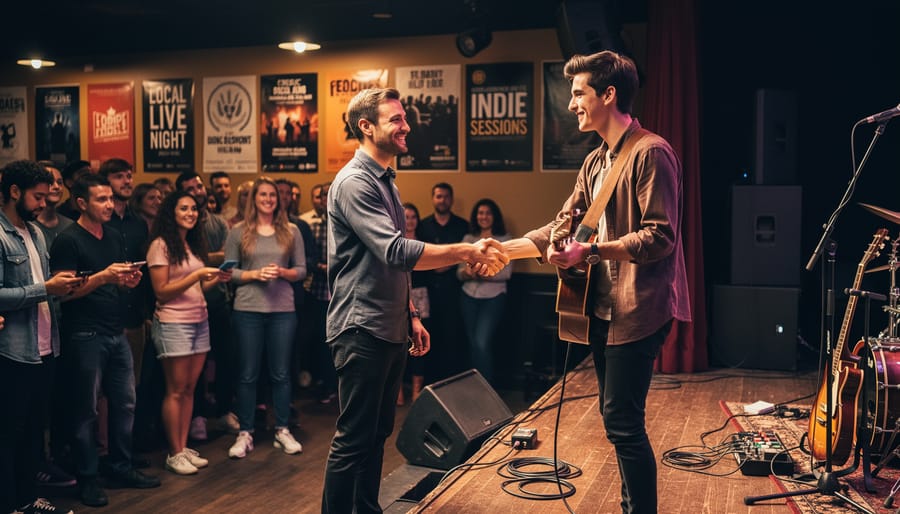
Venue and Promoter Partnerships
Building strong relationships with venues and promoters can transform your music career from sporadic gigs to a sustainable touring circuit. Across Canada’s vibrant music landscape—from intimate coffee houses in Halifax to iconic rooms like the Horseshoe Tavern in Toronto—venue partnerships open doors to consistent performance opportunities and audience growth.
Start by identifying venues that align with your sound and career stage. Research which spaces regularly book artists in your genre, then attend shows there to understand the vibe and connect authentically with staff and promoters. When you do reach out, personalize your pitch and demonstrate you’ve done your homework about their programming.
Residencies represent one of the most valuable partnership opportunities available. These ongoing commitments—whether weekly, monthly, or seasonal—let you develop a dedicated local following while guaranteeing regular income. Venues benefit from reliable programming, and you gain a home base to experiment creatively and build community. From Montreal’s jazz clubs to Vancouver’s folk venues, residencies are happening everywhere.
Showcase opportunities at festivals and music conferences help you break into new markets. Events like BreakOut West and ECMA provide platforms where emerging talents can connect with promoters managing regional circuits.
Becoming a preferred artist means proving you’re reliable, professional, and draw audiences consistently. Deliver quality performances, promote shows enthusiastically on your channels, and maintain open communication. These relationships compound over time, leading to better slots, festival recommendations, and introductions to promoters in other cities—building the cross-Canada network every touring artist needs.
Building Partnerships When You’re Just Starting Out
If you’re an emerging artist, you might feel like you’re bringing an empty toolbox to the partnership table. Here’s the truth: you have more to offer than you think. Every artist starts somewhere, and Canadian music history is filled with collaborations that began when both parties were unknowns grinding it out in basement venues and community radio stations.
Your unique value might not be obvious at first, but it’s there. Maybe you have a dedicated following in your neighbourhood, even if it’s just 200 engaged fans. Perhaps you’re killer at TikTok or Instagram Reels while another artist struggles with social media. You might have access to a recording space, design skills, or connections to a venue owner. Even your fresh perspective and hunger to collaborate is valuable to someone who’s been going solo for years.
Start by thinking micro. You don’t need to partner with a Juno winner right away. Look at artists in your local scene who are one or two steps ahead of you. That songwriter who just released their first EP, the producer who’s building their portfolio, or the visual artist creating show posters. These micro-partnerships help you learn the collaboration process without overwhelming pressure.
Here’s a practical approach to landing your first partnership:
- Identify your niche and what makes your sound or approach distinctive within the Canadian music landscape
- Research 5-10 artists whose work complements yours and who share similar career stages or audience demographics
- Craft a genuine, personalized pitch that shows you actually know and appreciate their work
- Offer specific value upfront, whether it’s cross-promotion, a skill swap, or contributing to a concrete project
- Start with a small, low-risk collaboration like a single track feature or joint Instagram Live session
- Deliver exceptional work and be reliable, professional, and easy to work with
- Request a testimonial or case study you can use when approaching your next potential partner
When approaching potential partners, skip the generic “hey, we should collab sometime” messages. Instead, be specific: “I loved your track about growing up in Halifax. I’m working on a concept EP about Maritime identity and think your production style would be perfect for the closing song.” This shows respect for their time and demonstrates you’re serious about creating something meaningful together, not just chasing clout.

Red Flags and Partnership Pitfalls to Avoid
Navigating the partnership landscape means keeping your eyes open for relationships that don’t serve your best interests. While the Canadian music scene is filled with genuine collaborators, there are some warning signs worth knowing about.
Watch out for agreements that feel one-sided from the start. If a potential partner asks you to commit exclusively while they maintain freedom to work with others, that’s a red flag. The same goes for partnerships where you’re expected to provide all the creative content, promotion, or financial investment while benefits seem to flow primarily one direction. Healthy collaborations involve mutual contribution and shared rewards.
Be cautious about anyone pressuring you to sign contracts immediately without giving you time to review terms with a lawyer or trusted advisor. Legitimate partners understand that protecting yourself legally is just smart business. Speaking of contracts, vague language around rights ownership, revenue splits, or termination clauses should raise concerns. Canadian artists have worked too hard building their careers to risk losing control of their music or brand through unclear agreements.
The “pay-to-play” model remains controversial in Canadian cities. While some showcases charge reasonable fees, be wary of promoters demanding large upfront payments with promises of exposure that seem too good to be true. Research their track record and talk to other artists who’ve worked with them.
Social media scams have also emerged, with fake playlist curators or influencers offering promotion for fees but delivering little genuine engagement. Always verify someone’s legitimacy before paying for services.
Trust your instincts. If something feels off about a partnership opportunity, take time to investigate further. Connect with fellow musicians, reach out to organizations like the Canadian Independent Music Association, and remember that protecting your artistic integrity is never overly cautious—it’s essential for long-term success.
Success Stories: Canadian Artists Who Leveled Up Through Partnerships
Canadian artists are proving that the right partnerships can transform careers in remarkable ways. Let’s celebrate some inspiring success stories that show how collaboration opens doors across our diverse music landscape.
Toronto’s Charlotte Day Wilson built her career through strategic partnerships that honoured her artistic vision. Her collaboration with producer BadBadNotGood helped her transition from bedroom artist to internationally recognized soul musician, leading to a record deal with XL Recordings and features on major festival stages. The partnership worked because both parties respected each other’s creative process while bringing complementary strengths to the table.
Classical violinist Kerson Leong from Montreal discovered the power of unconventional partnerships when he teamed up with Indigenous throat singer Tanya Tagaq for a cross-genre project. This collaboration not only expanded his audience beyond traditional classical music circles but also deepened his understanding of Canadian musical heritage. The partnership garnered attention from both CBC Music and international outlets, proving that genre-blending collaborations resonate with audiences hungry for innovation.
The partnership gave me permission to reach listeners I never thought would connect with my music, and it reminded me why I fell in love with performing in the first place.
This sentiment captures what many artists experience when the right collaboration comes along. The results speak for themselves: increased streaming numbers, festival invitations, and most importantly, artistic growth that sustains long-term careers.
Indie band Partner from Windsor, Ontario took a different approach by partnering with independent label You’ve Changed Records. This relationship gave them distribution support while maintaining creative control, resulting in successful tours across Canada and critical acclaim. Their story demonstrates that partnerships don’t always need to be with major labels to create meaningful career advancement.
These artists share common lessons: they chose partners aligned with their values, maintained clear communication throughout the process, and viewed partnerships as collaborative growth opportunities rather than shortcuts to fame. Whether you’re just starting out or looking to take your career to the next level, these success stories prove that thoughtful partnerships can make all the difference.
Making Your Partnership Work: Communication and Expectations
The foundation of any successful artist partnership is honest, open communication from day one. Before you even shake hands or share a stage, take the time to talk through what each person brings to the table and what everyone hopes to achieve. These conversations might feel awkward at first—especially among friends—but they’re essential for avoiding misunderstandings down the road.
Start by setting clear expectations about everything from creative decisions to financial arrangements. Who owns what? How will revenue be split? What happens if someone wants to pursue solo opportunities? These aren’t pessimistic questions; they’re the building blocks of trust. Even if you’re collaborating with your best friend from music school, get your agreement in writing. A simple document outlining responsibilities, revenue sharing, and decision-making processes protects everyone involved and actually strengthens the friendship by removing ambiguity.
Regular check-ins keep partnerships healthy. Schedule monthly or quarterly conversations to discuss what’s working and what isn’t. Celebrate wins together, whether that’s a successful show in Halifax or hitting streaming milestones. When measuring success, look beyond just numbers—consider creative growth, audience connection, and whether the partnership still feels energizing and authentic.
Conflicts will happen, and that’s okay. The key is addressing issues directly and respectfully rather than letting resentment build. If disagreements arise, focus on the problem rather than attacking the person. Sometimes bringing in a neutral third party—like a trusted manager or mentor—can help navigate tricky situations.
Finally, recognize when it’s time to move on. Not every partnership is meant to last forever, and ending one doesn’t mean failure. If your goals have diverged or the collaboration no longer serves both parties, have an honest conversation about wrapping things up gracefully. Protect your reputation and relationships by handling exits professionally—the Canadian music community is smaller than you think, and today’s collaborator might become tomorrow’s festival co-headliner in a completely different context.

In today’s connected music landscape, partnerships aren’t just nice to have—they’re essential tools in every Canadian artist’s career toolkit. Whether you’re recording in your bedroom in St. John’s or performing at venues across Vancouver, collaboration opens doors that simply don’t exist when you’re going it alone. The good news? You don’t need major label connections or an industry insider’s phone number to get started.
Think of partnerships as building blocks rather than massive leaps. That local coffee shop hosting open mics could become your first venue partner. The visual artist whose work you admire on Instagram might be your next album cover designer. The producer down the street experimenting with sounds similar to yours could be your creative collaborator. These connections start small, but they compound over time, creating a network of support that elevates everyone involved.
Remember, seeking partnerships isn’t a sign of weakness or artistic compromise—it’s a demonstration of professionalism and creative intelligence. Canada’s most successful artists, from indie darlings to chart-toppers, have built their careers on strategic collaborations that amplified their voices while staying true to their vision.
So here’s your challenge: before this month ends, identify one potential partnership opportunity you could pursue. Maybe it’s reaching out to a fellow musician about co-writing, contacting a local business about sponsorship, or proposing a collaborative show with an artist whose audience complements yours. Start the conversation. Your next creative breakthrough might be waiting in someone else’s inbox.