
Universal Production Music is a professional licensing platform that puts more than 630,000 tracks and sound effects at your fingertips, ready to license worldwide for film, television, podcasts, advertising, and digital content. Whether you’re a documentary filmmaker in Toronto, a podcast producer in Vancouver, or a content creator anywhere across Canada, this service connects you directly to a massive catalog built by composers, artists, and producers from around the globe.
What sets this platform apart in 2026 is how it blends scale with smart technology. The AI Search feature lets you describe the mood or moment you’re scoring using plain language instead of wading through endless tags and filters. Need something “uplifting but bittersweet for a graduation scene” or “gritty urban energy with a 90s hip-hop vibe”? Type it in. The system understands context in ways that traditional keyword search simply can’t match. There’s also an Adobe Premiere Pro extension that brings the entire library into your editing timeline, so you can audition music without breaking your workflow.
For Canadian creators navigating the production music landscape, understanding how licensing works and what tools can streamline your search makes all the difference. Production music exists to solve a specific problem: you need high-quality, legally cleared audio that won’t derail your budget or timeline. Universal Production Music delivers that solution at scale, offering worldwide licensing that covers the rights and clearances you need to publish with confidence. This guide will walk you through how the platform works, how to make the most of its discovery tools, and what you need to know about licensing basics so you can focus on telling your story.
What Makes Universal Production Music Different
Production music libraries operate on a fundamentally different model than traditional music licensing. When you license a commercial track, say, a hit song from a major artist, you’re navigating rights holders, sync fees, master recordings, and publishing splits. It’s a complex process that can take weeks and cost thousands of dollars, even for small projects.
Universal Production Music flips that approach. It’s a worldwide licensing platform built specifically for creators who need professional music fast. The platform offers ready-to-license tracks created by composers and producers who understand the needs of filmmakers, podcasters, and video editors. Instead of chasing down rights for a popular song, you’re working with music composed expressly for licensing, cleared, cataloged, and ready to use.
What sets it apart for Canadian creators is the combination of scale and accessibility. With over 630,000 tracks and sound effects available for worldwide licensing, you’re not limited to a handful of generic background loops. Whether you’re scoring a documentary in your Canadian home studio or cutting a corporate video on deadline, there’s genuine variety.
The platform also embraces modern workflows. AI Search lets you describe what you need in plain language, “cinematic piano with subtle strings”, rather than guessing at tags. The Adobe Premiere Pro extension means you can audition and license tracks without leaving your editing timeline. For Canadian creators juggling tight budgets and tighter deadlines, these tools remove friction from the creative process.
Finding the Perfect Track: AI Search and Modern Discovery Tools
Finding the right music for your project used to mean scrolling through endless generic search results or paying for expensive custom compositions. Universal Production Music’s AI-powered search tools are changing that equation for Canadian creators who need professional tracks fast.
The AI Search feature lets you describe exactly what you’re hearing in your head. Type “upbeat indie track with Canadian folk elements” or “moody piano piece for documentary transition,” and the system interprets your natural language to surface relevant matches from the 630,000+ track library. It’s not about hunting for the perfect keyword combination anymore. You can search by mood, instrumentation, cultural flavor, tempo, or even describe a specific scene you’re scoring.
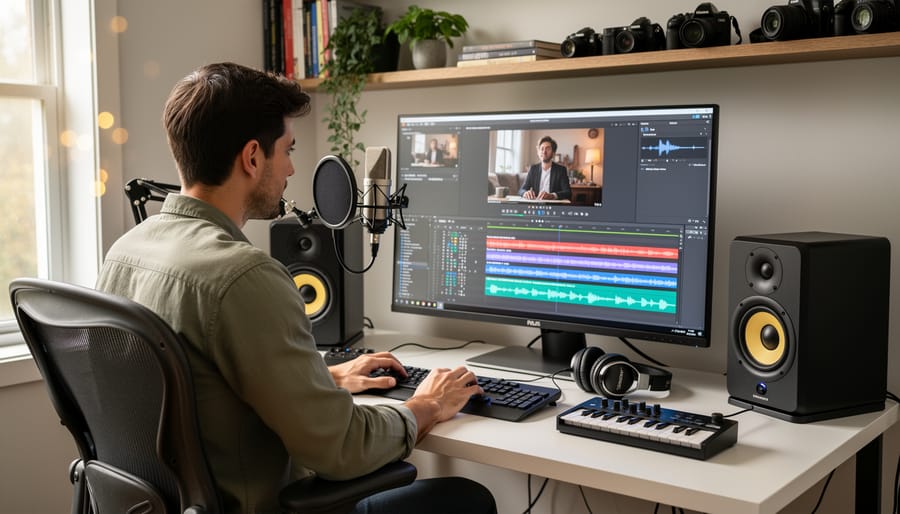
For video editors working in Adobe Premiere Pro, the workflow integration removes another friction point. The Adobe Premiere Pro extension puts Universal Production Music’s entire catalog inside your editing timeline. You can audition tracks while you’re cutting footage, drop them directly into your sequence, and adjust your edit to the music’s rhythm without jumping between applications. That kind of in-workflow access matters when you’re on deadline or when creative momentum means the difference between nailing a cut and settling for close enough.
These tools don’t just save time. They open creative possibilities for Canadian producers who might not have the budget for a music supervisor or the network to find the perfect emerging composer. A podcast producer in Halifax can find atmospheric tracks that match their Atlantic storytelling style. A Toronto advertising editor can test multiple music directions in minutes instead of hours. An indie filmmaker in Vancouver can experiment with different sonic palettes during the rough-cut phase, when decisions are still fluid.
The discovery process becomes part of the creative conversation, not a logistical hurdle you push through to get to the real work.
The Global Network Behind the Music

Universal Production Music draws from a worldwide network of composers, artists, and producers to build its massive catalog, creating opportunities that extend far beyond traditional music distribution. This collaborative model means tracks in the library come from diverse creative backgrounds, representing different musical traditions, production styles, and cultural perspectives. For Canadian musicians and composers, this represents a meaningful pathway into global markets without the traditional barriers of commercial music distribution.
The production music model offers Canadian creators something the conventional Canadian music industry structure doesn’t always provide: direct access to filmmakers, content creators, and brands worldwide. When a composer from Vancouver or Montreal contributes tracks to a production library, that music becomes available to projects across continents. A documentary filmmaker in Berlin, a podcast producer in Sydney, or a corporate video team in Tokyo can discover and license that work, creating revenue streams and exposure that bypass traditional geographic limitations.
This platform particularly benefits emerging artists. While the best musicians in Canada often secure commercial placements through established industry connections, production libraries democratize access. A composer just starting out can submit work that sits alongside tracks from seasoned professionals, judged primarily on quality and relevance rather than existing industry relationships. The worldwide licensing model means every track has potential reach, whether it comes from an established studio or a home recording setup in Halifax.
For contributors, production music offers ongoing passive income as their catalog works across multiple projects simultaneously, a stark contrast to one-off sync placements in traditional media.
Who Benefits from Production Music Libraries
Production music libraries serve a remarkably diverse cross-section of Canadian creators, each with distinct needs but a shared challenge: finding high-quality, legally cleared music without the complexity of traditional licensing negotiations.
Indie filmmakers represent one of the largest user groups. Whether you’re shooting a short film in Montreal’s Plateau or a feature documentary about prairie conservation, a library offering 630,000+ tracks means you can score everything from intimate character moments to sweeping landscape sequences without hiring a composer or navigating sync rights with multiple record labels. The music is pre-cleared, so you can focus on storytelling rather than legal paperwork.
YouTube creators and digital content producers rely heavily on production music to avoid copyright strikes while maintaining professional production values. A travel vlogger showcasing the Maritimes needs coastal, folk-inflected instrumentals; a tech reviewer in Vancouver wants clean, modern beds that won’t compete with voiceover. These creators often work on tight budgets and faster turnarounds than traditional media, making ready-to-license libraries essential infrastructure.
Podcast producers increasingly treat audio as a craft requiring sonic identity. Opening themes, transition beds, and episode-specific cues all come from production libraries, allowing shows ranging from true crime series to business interviews to establish mood and pacing professionally. The ability to search by emotion or narrative arc, rather than just genre, transforms how podcasters approach sound design.
Corporate video teams and advertising agencies use production music daily. Internal communications, product launches, branded content, and regional ad campaigns all need music that fits brand guidelines and clears legal review. For agencies employing teams across creative and music industry jobs having a reliable library streamlines workflow and eliminates licensing uncertainty across client projects.
Educational content creators, non-profit organizations, and event producers round out the ecosystem, all seeking affordable access to professional music that enhances their work without legal risk.
Understanding Licensing for Your Projects
Worldwide licensing sounds straightforward, but understanding what it means for your specific project saves headaches down the road. When you license a track from a production music library, you’re purchasing the right to use that music in defined contexts, whether that’s a YouTube video, a podcast episode, a corporate training video, or a film festival submission. The “worldwide” part means the license covers distribution globally, which is essential for Canadian creators whose work often reaches audiences beyond national borders through streaming platforms and social media.
The key to selecting the right licensing approach is matching the license type to your distribution plan. A track used in a single corporate video shown internally has different requirements than the same track used in a monetized YouTube series or a theatrical release. Most production music platforms offer tiered licenses based on how and where you’ll use the music: web-only licenses for online content, broadcast licenses for television and streaming services, and broader commercial licenses for advertising campaigns. Each tier expands the permitted uses and typically the coverage period.
Rights and clearances are generally more straightforward with production music than with commercial tracks because the library has already secured the necessary permissions from composers and rights holders. You don’t need to track down individual artists or negotiate terms, the platform handles that infrastructure. However, you still need to understand what your license covers: duration of use, geographic territory (even if it’s worldwide), exclusivity, and whether modifications or synchronization with visuals are permitted.
For Canadian creators working across multiple platforms, say, a podcast that also becomes YouTube content and social media clips, consider how your licensing needs might evolve. Some projects start small and grow, so understanding upgrade paths or broader licenses from the outset can prevent re-licensing headaches when your documentary gets picked up for festival distribution or your indie series finds a streaming home.
Common Questions About Production Music Licensing
How is production music different from commercial music I hear on streaming platforms?
Production music is created specifically for licensing to content creators, filmmakers, and media producers rather than for radio play or album sales. Unlike commercial tracks, production music comes pre-cleared for use in projects, meaning the rights are designed for creators to license rather than requiring individual negotiations with artists and labels.
Can I use production music in monetized YouTube videos or client projects?
Yes, that’s exactly what production music is designed for. Once you license a track through a production music library, you typically have the rights to use it in commercial and monetized content, though you should always review the specific licensing terms for your project type to ensure proper coverage.
What does ‘worldwide licensing’ mean for my Canadian projects?
Worldwide licensing means you can use the music in projects that will be distributed globally, not just within Canada. This is particularly valuable if you’re creating content for YouTube, streaming platforms, or international clients, as you won’t face geographic restrictions on where your work can be shown.
Do I need to credit the music in my videos or podcasts?
Credit requirements vary by platform and license type. Some production music libraries require attribution in your project credits, while others don’t. Check the terms of your specific license and include composer credits when required, it’s also good practice for supporting the artists who created the music.
Getting started with a production music library is straightforward for most Canadian creators. You’ll typically create an account, browse or search the catalog using tools like AI Search (which lets you describe what you’re looking for in plain language), preview tracks to find the right fit, and then license the music according to your project needs. Many platforms offer different licensing tiers based on how you’ll use the music, a short film screening at a local festival might require different licensing than a national advertising campaign.
The key is understanding your project scope before you license. Consider where your content will be distributed, how long you’ll use it, and whether it’s for personal, commercial, or client work. Production music libraries are built to accommodate everything from indie passion projects to professional client deliverables, making them accessible whether you’re a first-time podcaster in Halifax or an established production company in Toronto.
Universal Production Music represents a meaningful shift in how Canadian creators access professional-grade soundtracks for their work. With over 630,000 tracks searchable through AI-powered tools that understand descriptions like “moody guitar track for a northern Ontario documentary,” platforms like this remove traditional barriers between emerging filmmakers and the music they need. You don’t need industry connections or hefty budgets to find production value that matches your creative vision.
For Canadian podcasters building audiences in Winnipeg, YouTube creators documenting life in Halifax, or indie filmmakers telling stories from the Prairies, production music libraries offer a practical path forward. The Adobe Premiere Pro integration means you can audition tracks without leaving your editing timeline. The worldwide licensing model simplifies clearances for projects that might reach audiences across borders.
This ecosystem also supports Canadian composers and producers contributing to global libraries, creating reciprocal opportunities within the music community. If you’re an emerging creator looking to elevate your projects, exploring production music isn’t just about finding the right track, it’s about joining a system that values accessibility, supports artists, and recognizes that great storytelling deserves great sound.